

Sterilization procedures are very important to any good dental practice. These are a part of basic care and handling of patients that your dentist must incorporate to be able to give you quality oral health care. Our mouths are teeming with microbes, and any dental office that sees a large number of patients a day has an inherent potential for spreading infectious germs between patients and dental staff, through contaminated instruments and surfaces. These can be greatly minimized by following proper infection control procedures.
The Centers for Disease Control has laid down infection control guidelines that a dental office should adhere to:
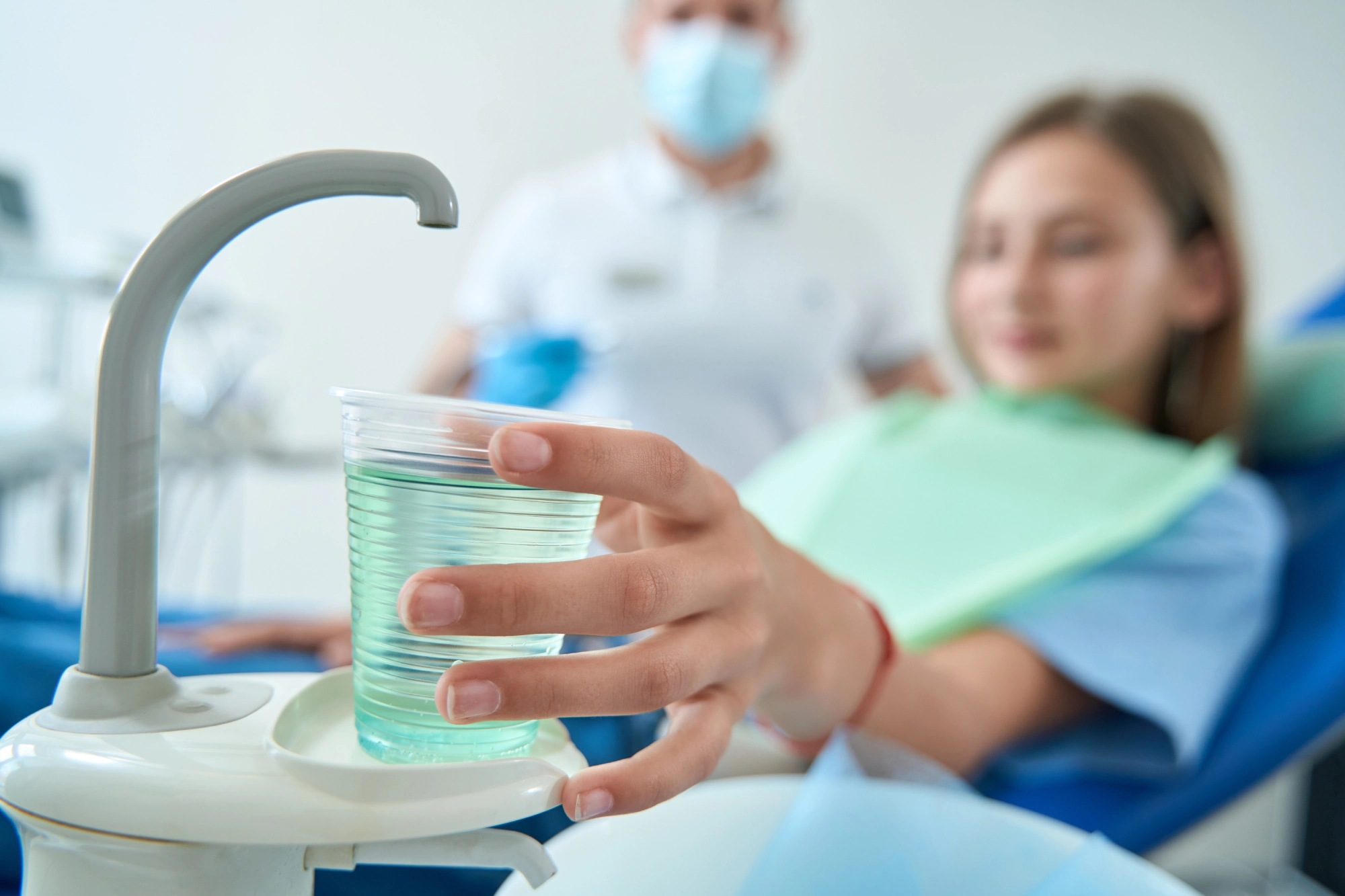
Good dental infection control starts with the dentist’s room itself. A well-ventilated room with air-circulating devices prevents building up of aerosols produced from the dental drills. The sterile dentist and assistant are immunised against hepatitis, wear clean personal protective equipment-a scrub apron, eyewear, disposable gloves and facemasks. The patient is draped, and may be given a protective “face shield” to prevent skin contamination from the dental drill’s water spray. An anti-microbial mouth rinse just before a dental procedure is important to reduce contamination.
The dental chair’s knobs and handles need to be chemically disinfected between patients. All the dental instruments that go into patient’s mouth need to be subjected a high-degree sterilization procedure, such as “autoclaving,” which destroys all microbial contamination. These instruments are then stored in a dry, sterile, contained area such as disposable pouches or cassettes, and removed just before using for the patient. Local injections require disposable needles with single-use syringes or sterile cartridges for each patient.
Surgical procedures require more stringent measures to eradicate all chances of infection and need special preparation of the dentist’s room. The dentist, assistant and patient all need sterilized gowns, and all instruments, drills, suction apparatus has to be completely sterilized. These procedures require sterile saline within the drills. Bone grafts, membranes and suture packets are all intended to be used once opened and cannot be reused at later appointments.
Sarah, a nursing aide by profession who recently got dental implants in Plano, said: “One reason I chose my Plano dentist to have implants was that I could see the utmost importance his office gives to maintaining sterilisation, which I know is crucial to the success of implant surgery. Not only that, it reflects on the commitment my Plano dentist has to care for his patients like his own family!”
Infection control measures not only reduce the chances of getting a dental infection, they also reduce the risk of catching serious diseases like HIV and hepatitis, so choosing a sterile dentist is important to stay healthy!

