Most patients want to replace a missing tooth because they’re concerned about an absent tooth’s aesthetic impact on the smile. However, it’s just as important to replace the missing tooth’s root as well. Always consult with an implant dentist when exploring tooth replacement options.
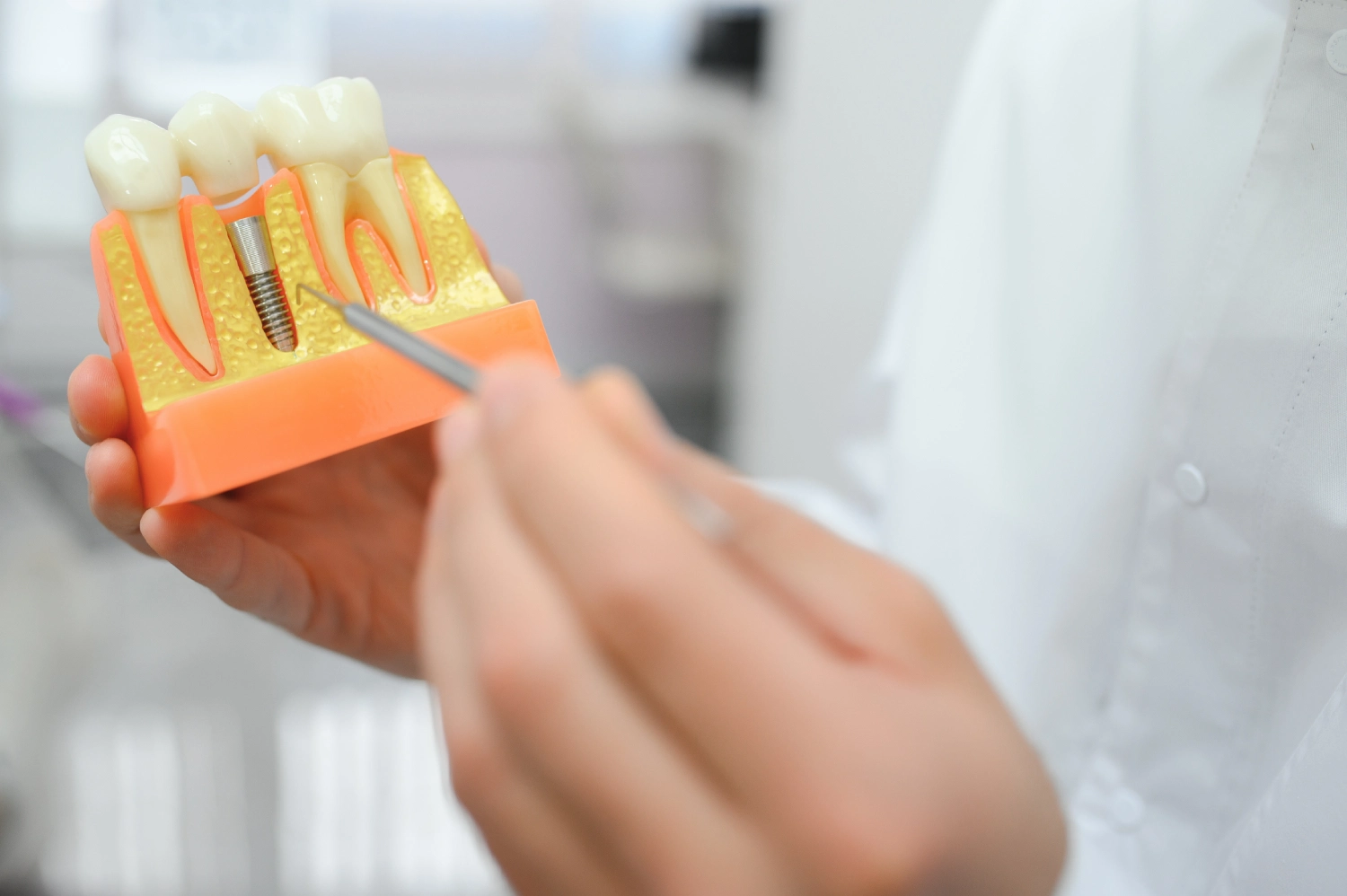
Dental implants can achieve this goal. The small screw-like structure that forms the base of the implant helps to stabilize the jaw in the same way that a biological tooth’s root does.
Because the jawbone wears away when no root is present to serve as an anchor, Dr. John M. Hucklebridge, an implant dentist in Plano, can help to prevent the erosion by placing implants. Other tooth replacement alternatives, such as bridges or dentures, don’t replicate the entire structure of the missing tooth. Therefore, those other methods allow the jawbone resorption to continue unabated, eventually changing the bone’s shape.
This erosion of the jawbone can have a wide variety of effects. Other teeth in the mouth can be compromised and lost as the bone continues to disappear. If all of the teeth are extracted, jawbone resorption can cause pinching of the mouth, resulting in an aged appearance. As the jawbone shrinks, it can affect the patient’s speech and require dietary adjustments, as well.
People who have already experienced significant bone loss resulting from missing teeth may think that they are not candidates for dental implants, but that is not the case. Certain techniques can help an implant dentist to maximize available bone for implant placement, or bone graft procedures can be used to supplement the jaw bone enough to support the implants.
Additionally, if your bone loss is due to advanced gum disease, you will need to address this issue before the dental implants can be placed. Untreated periodontal disease can still lead to bone loss, even if an implant has been placed, and continued bone loss can lead to implant failure.
Patients who need to replace missing teeth should seriously consider dental implants in Plano to stop jawbone atrophy in addition to improving the smile’s appearance.